Angry women in horror: Challenging traditional notions of femininity
Abstract
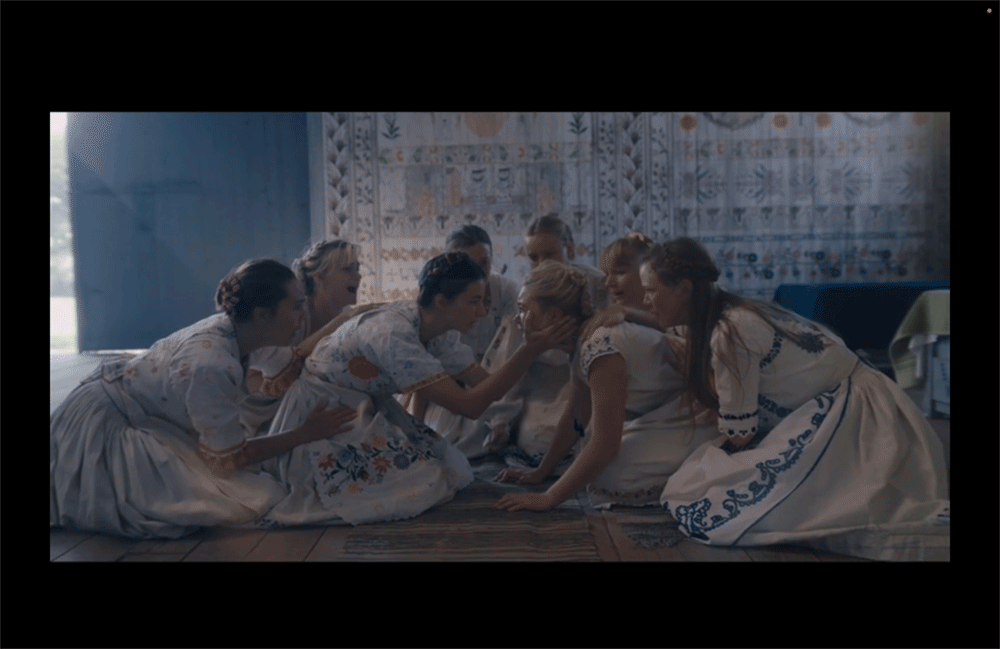 One of the major contributions to popular culture by feminist movements has been that of the figure of the angry woman in horror cinema. Although the expression of female rage challenges traditional notions of femininity and disassociates strength and power from masculinity, it also makes women to be portrayed as perverse and monstrous. With this videographic essay, I want, on the one hand, to show how the rage of women protagonists in horror has nevertheless recently been depicted as the complex emotion it is. On the other hand, this video essay proposes to emphasize the idea of rage as a site of political resistance that can be channelled into a productive form of social change and justice. To this end, I focus on a scene from Midsommar (Aster, 2019) in which a group of women reflect the protagonist’s emotions of rage and pain as a form of healing. Their cries connect to those of the women who in 1984 protested nuclear weapons in Greenham (England), weaponizing traditional notions of femininity to denounce an environmental injustice.
Format
License
In order to support the global exchange of knowledge, the journal Teknokultura is allowing unrestricted access to its content as from its publication in this electronic edition, and as such it is an open-access journal. The originals published in this journal are the property of the Complutense University of Madrid and any reproduction thereof in full or in part must cite the source. All content is distributed under a Creative Commons Attribution 4.0 use and distribution licence (CC BY 4.0). This circumstance must be expressly stated in these terms where necessary. You can view the summary and the complete legal text of the licence.