CALL for PAPERS for the next issues 15/1, and 15/2.
Special Issue 15/2 (2026-2)
A chromatic Middle Ages
Guest editors: Ana María Cuesta Sánchez and Ángel Pazos-López
Deadline: 30 April 2026
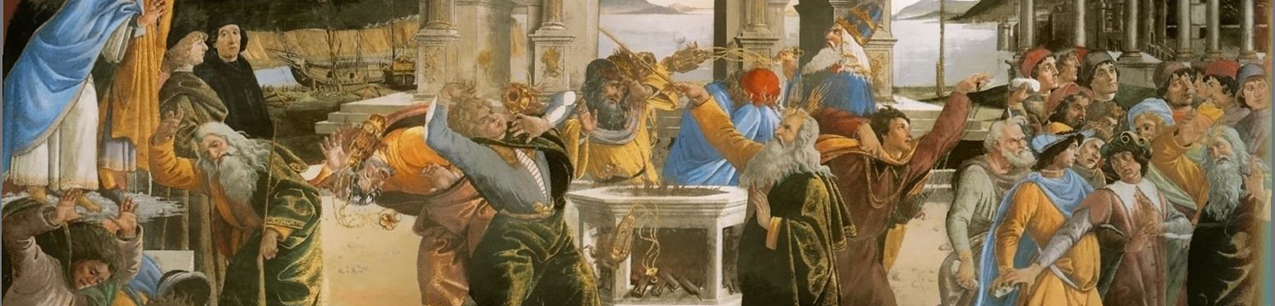
In recent years, research into the chromatic reality of the Middle Ages has received increasing attention from scholars in different academic disciplines. Fortunately, the vision of a dark and monochrome Middle Ages –propagated by nineteenth-century historiography– is gradually being banished from the collective imagination thanks to important actions of scientific knowledge transfer in the media, informative books and fictional creations. Many medieval art works preserved today in museums, cathedrals and churches provide us with important information about the technical composition or the processes of material creation associated with the colours. In addition, an understanding of the different dimensions of medieval colours has implications that go beyond the pure materiality and are connected to the sensory experience of medieval men.
To this end, a series of thematic lines around which the contributions of the researchers can revolve are proposed:
The material dimension of mediaeval colours, evoked through the study of pigments, materials, dyes and chromatic elements used to give colour to different artefacts and art works.
The artistic and documentary dimension of medieval colours, traceable through documentary sources, treatises, artists' books, as well as evidence of chromatic uses in the diversity of the arts.
The technical dimension of medieval colours, materialized in the plurality of uses in numerous artistic media and supports, such as illuminated manuscripts, polychromy on stone, wood, panel or canvas, as well as the study of colour in the diversity of the sumptuary arts, such as stained glass, enamels, ceramics, mosaics or textiles.
The symbolic dimension of medieval colours, reflected in the social and extra-semantic uses and values conferred on the chromaticism of spaces, clothing and objects of daily or festive use, both in the sacred space and in the daily or courtly environment.
Monographic theme of the issue # 16/1 (2027-1)
Multifaceted Middle Ages: Dialogue and Conflict Between Different Cultures
Editor: José María Salvador-González
Deadline: Octuber 31, 2026
The Middle Ages, in the Western world, was a period of intense interaction between Christian, Islamic, and Jewish cultures.
This interaction often took the form of respectful dialogue and determined cooperation in the fields of philosophical thought and scientific knowledge. Of particular note are the significant Arab contributions to philosophy, thanks to their translations of texts by Greek philosophers, such as Aristotle, who were previously little known in Europe. The close collaboration between these three cultures at the Toledo School of Translators, established around King Alfonso X the Wise, is exemplary in this regard. Arab culture also contributed significantly to Western science with its decisive discoveries, especially in mathematics, chemistry, medicine, physics, and astronomy.
However, the interaction between these three cultures frequently took the form of conflict and violent confrontation, generally for religious and political reasons related to the control of territory and natural resources.
The academic journal De Medio Aevo thus offers its monographic issue 16(1) as a suitable platform to investigate and debate the complex relationships of dialogue/conflict between diverse cultures that coexisted in the same geographical space throughout the Middle Ages.











